Sea Kelp in the Stefansson Sound Boulder Patch, Alaska Christina Bonsell tilt current meter TCM Lowell Instruments
Christina Bonsell, a PhD student at the Dunton Lab at the University of Texas in Austin has been using tilt current meters or TCM1’s since 2015 and deployed several meters in the field. Her research team headed by Ken Dunton, is looking at a kelp bed community located in the central Alaska Beaufort Sea coast, an isolated part of the Arctic Ocean. The Boulder Patch is a biodiverse marine environment that is rich in the kelp Laminaria solidungula.
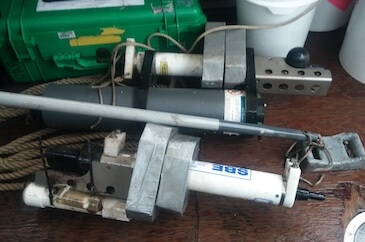
The TCM’s were attached to 10-pound dive weights in varying depths and areas of a large lagoon where the maximum depth is 10 to 12 meters. Of the meters, Christina said, “they are less expensive, very easy to deploy, easy to retrieve via scuba divers and relatively small”. The data that is retrieved will look at “current dynamics in the lagoon both in spatially different depths within and some more exposed areas of the lagoon where there is more exchange with the open ocean”. It will help to look at how currents are different over space and time. The meters were deployed every 12 months so the data will be next retrieved this month or in August.
To learn more about their research on sea kelp and published data: