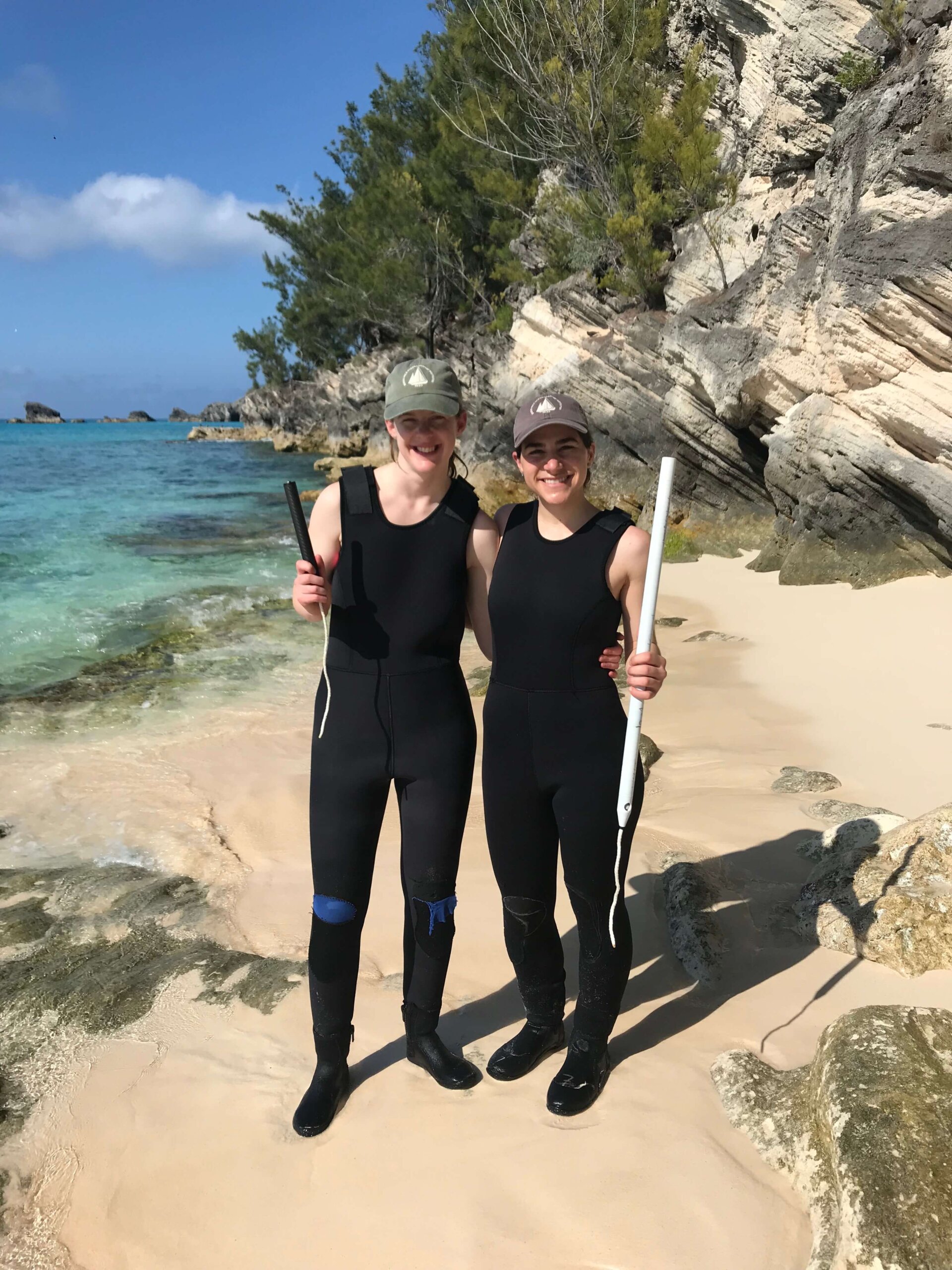
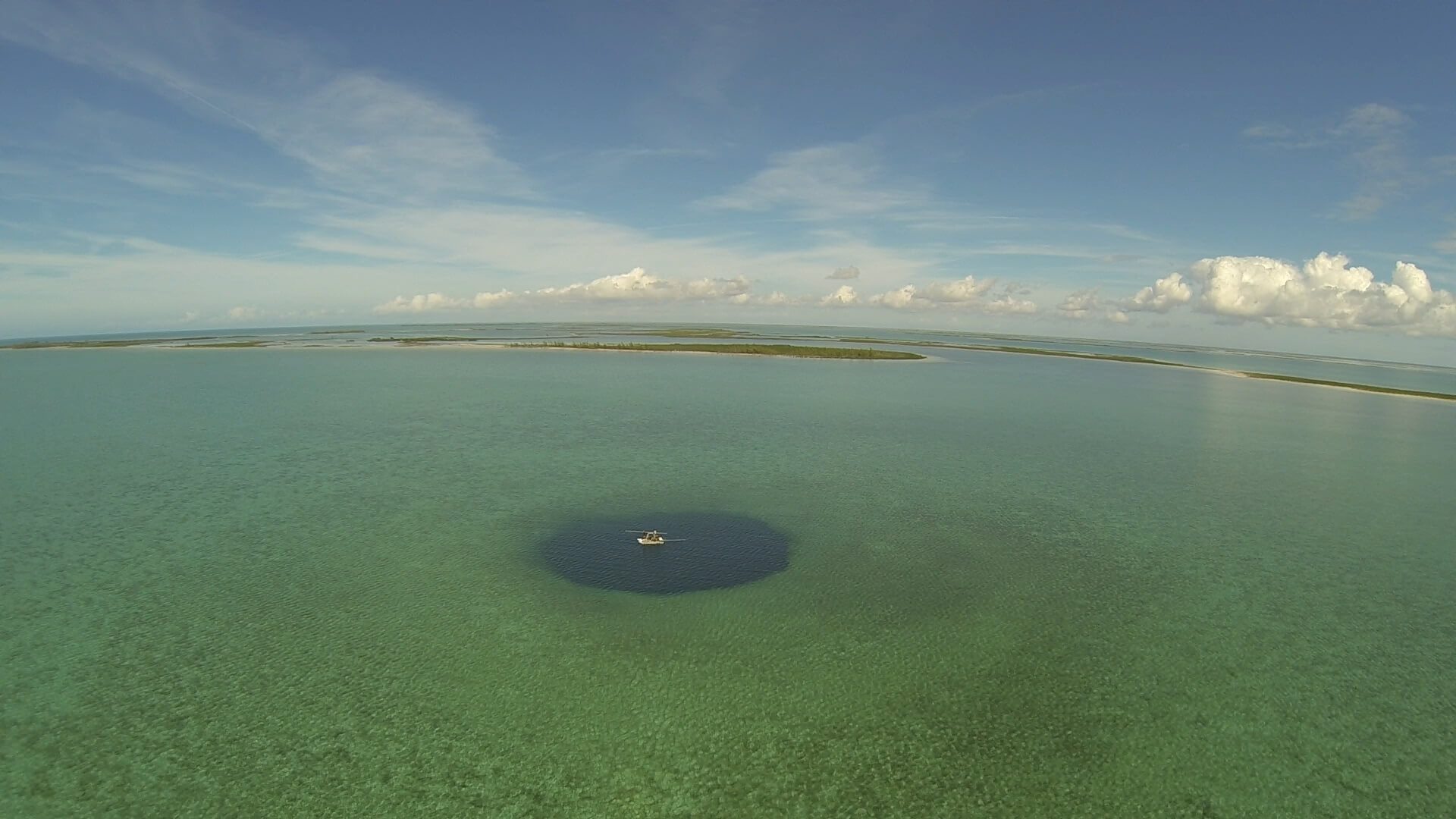
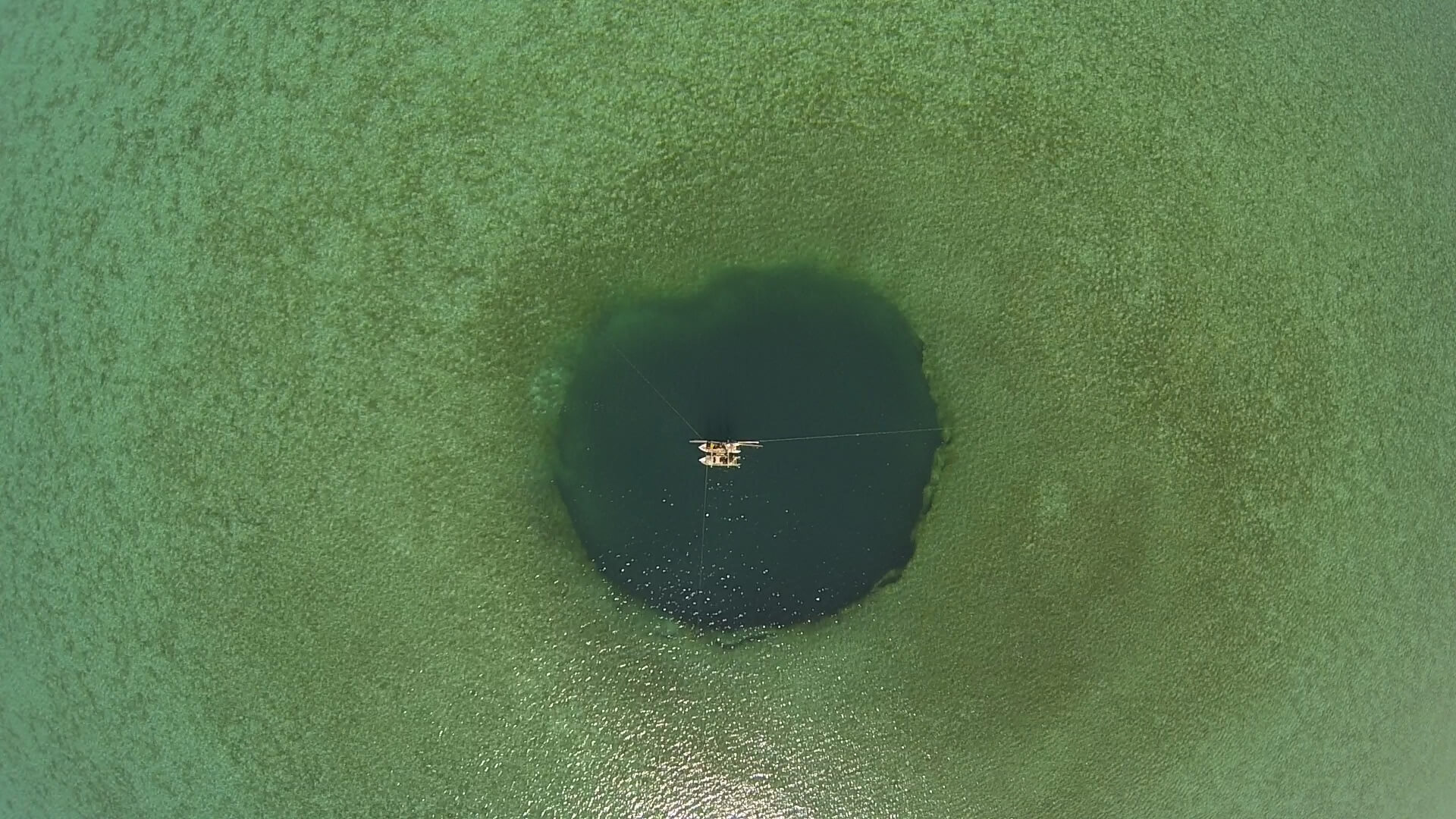
Jeff Donnelly from the Woods Hole Oceanographic Institution and his team are researching blue holes in the Caribbean to connect the dots on climate history and hurricane activity. Tilt current meters were used to aid in the research and were deployed long-term all over the Caribbean, specifically in several blue holes in the Bahamas, Jamaica, Turks and Caicos. Researchers have also used tilt current meters all over the world for short-term deployments in locations such as the Maldives and Bermuda.
“Coring is a key component of our fieldwork and our target sites are often blue holes, back barrier ponds, lagoons or other geologic depressions protected by a shallow sill that serve as sedimentary bowls. This geometry is important as the sediment inside the bowl remains undisturbed during storm events and serves as a time capsule”, said Nicole d’Entrement, Research Assistant for the WHOI team. “Tilt [current] meters are deployed every time we travel to a site of interest. The majority of our research sites are remote and hard to reach so we retrieve the data annually or biannually”.
Tilt Current Meters (TCM’s) were used to determine where deposited sediment is transported from and how the water on the sill is behaving during a storm. “In combination with other sensors we can tell how much water is piled onto the sill and the direction that it is coming from. It’s important data to collect and would be difficult to measure without a tilt [current] meter”, Nicole said. The benefits of TCM’s are, as Nicole noted, that they “are light, easy to transport, and resilient. We recovered data off of our tilt [current] meter that survived Hurricane Irma in 2017.”
By applying a “multi-site/multi-environment approach to reconstruct past intense hurricane landfalls”, Jeff and his team are able to construct “a comprehensive picture of hurricane activity in the North Atlantic…to distinguish changes in hurricane genesis and changes in hurricane track.”
The TCM’s that were deployed were attached to a paver with another length of line that was attached to an anchor. Since TCM’s work well in tandem with other devices a sensor was also fastened to the anchor. The assembly was then lowered from a boat and a diver was able to set the TCM’s in place.